The Blue Frontier: How Yachting Went Green in 2026
For decades, the superyacht was a symbol of excess. Today, it is becoming a laboratory for environmental innovation. As we navigate through 2026, the “eco-yacht” is no longer a concept found only in design sketches; it is a high-performance reality driven by three major pillars: Hydrogen Power , Circular Materials , and Strict Global Regulations .
The Dawn of the Hydrogen Era
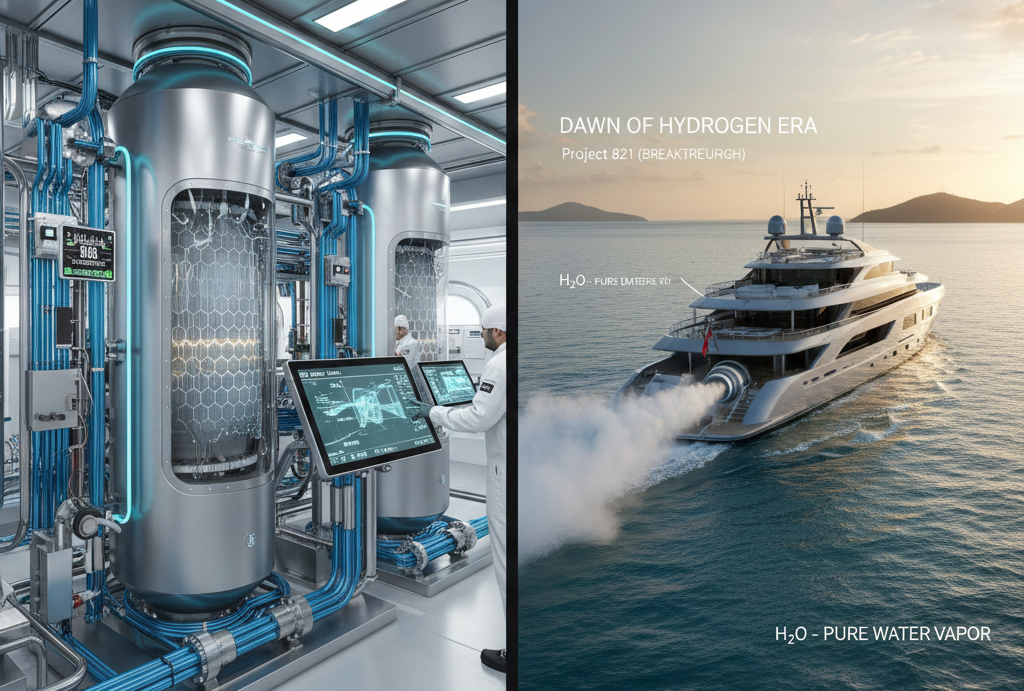
The headline of 2026 is the successful deployment of liquid hydrogen. Vessels like Feadship’s Project 821 (BREAKTHROUGH) and Lürssen’s Project Cosmos have proven that hydrogen fuel cells are a viable solution for the industry’s biggest challenge: the “Hotel Load.”
Zero-Emission Anchoring: These yachts can now sit at anchor for up to 15 days without ever starting a diesel generator. The only exhaust? Pure water vapor.
Silent Cruising: Hydrogen fuel cells allow for near-silent navigation at speeds of up to 10 knots, preserving the tranquility of the marine environment and the guest experience.
The "Circular" Interior: Beyond Recycled Plastic
In 2026, “sustainable luxury” means more than just removing plastic straws. Interior designers are now using bio-based composites and regenerative materials that rival the finest leathers and marbles.
The End of Old-Growth Teak: Strict sourcing laws have pushed the industry toward recycled aluminum hulls and decks made of cork, bamboo, or high-tech synthetic teak that doesn’t require the destruction of tropical rainforests.
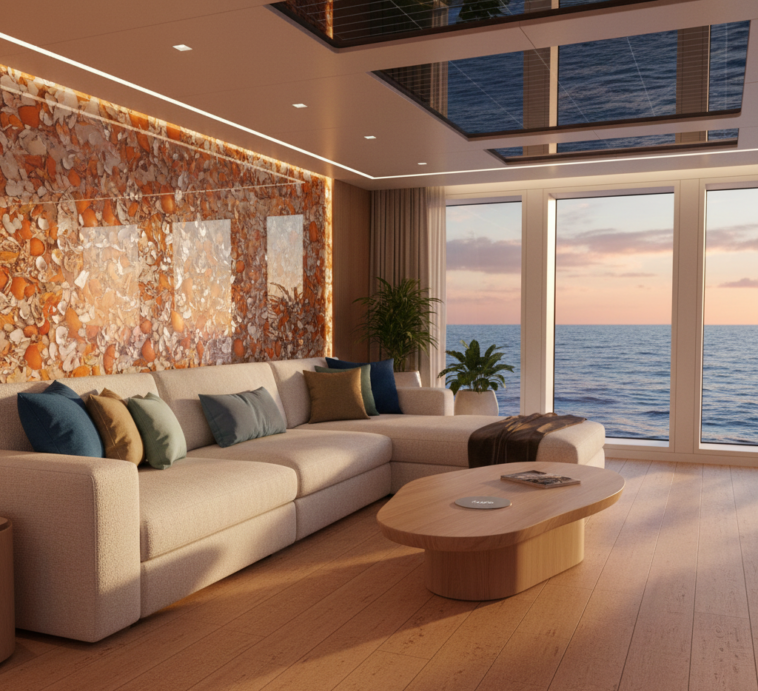
Waste-to-Wonder: Surfaces are being crafted from upcycled eggshells, orange peels, and even ocean-bound plastic transformed into opulent, high-gloss finishes.
AI-Driven Energy Management
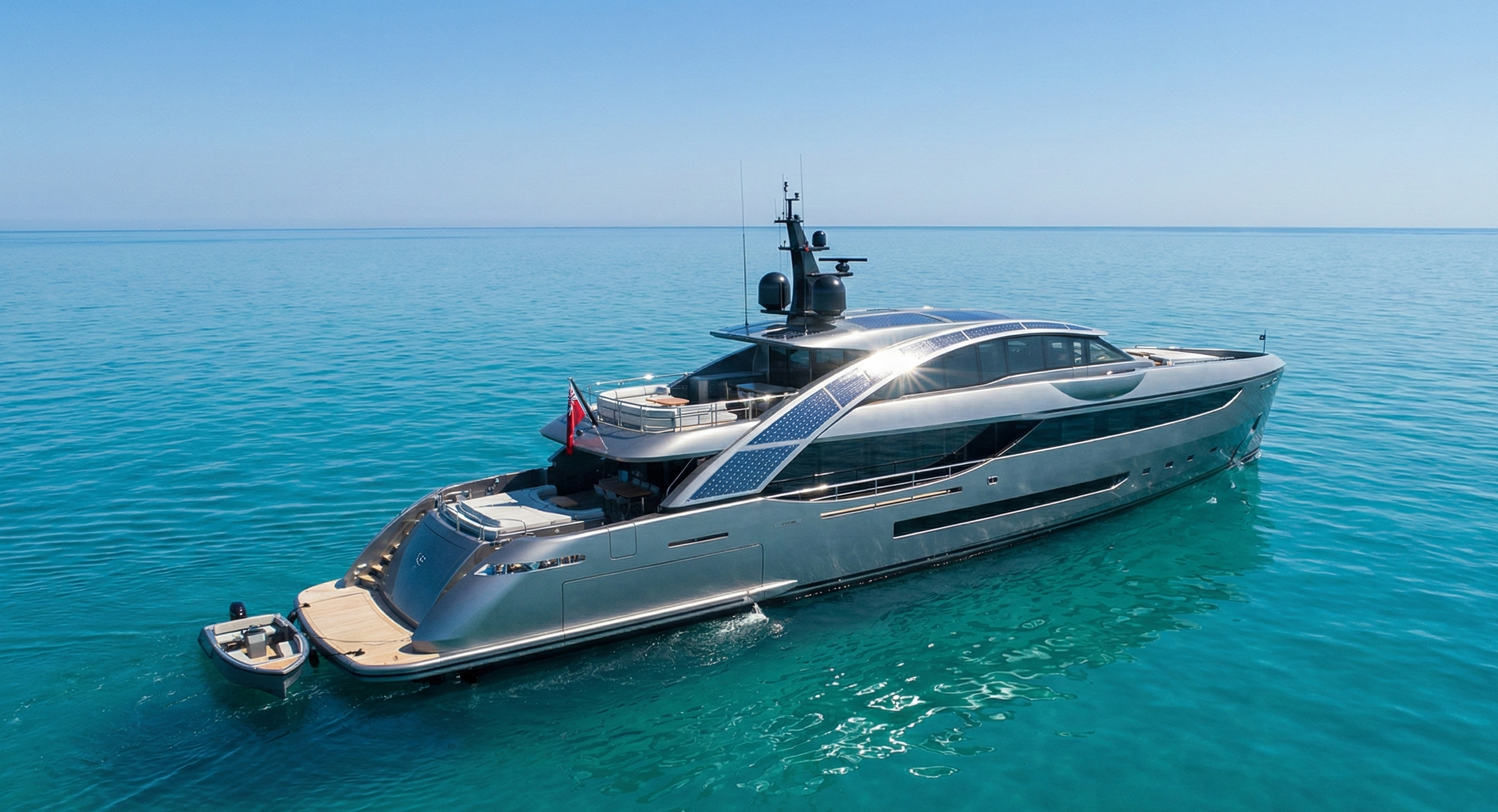
Modern yachts in 2026 are essentially “smart grids” on the water. New AI systems like the one found on the Rossinavi Seawolf
Predictive Routing: AI analyzes wind, current, and weather data to suggest the most fuel-efficient course.
Smart HVAC: Air conditioning, which typically accounts for a massive portion of energy use, is now managed by sensors that shift cooling power only to occupied rooms, reducing waste by up to 30% .
Solar Integration 2.0
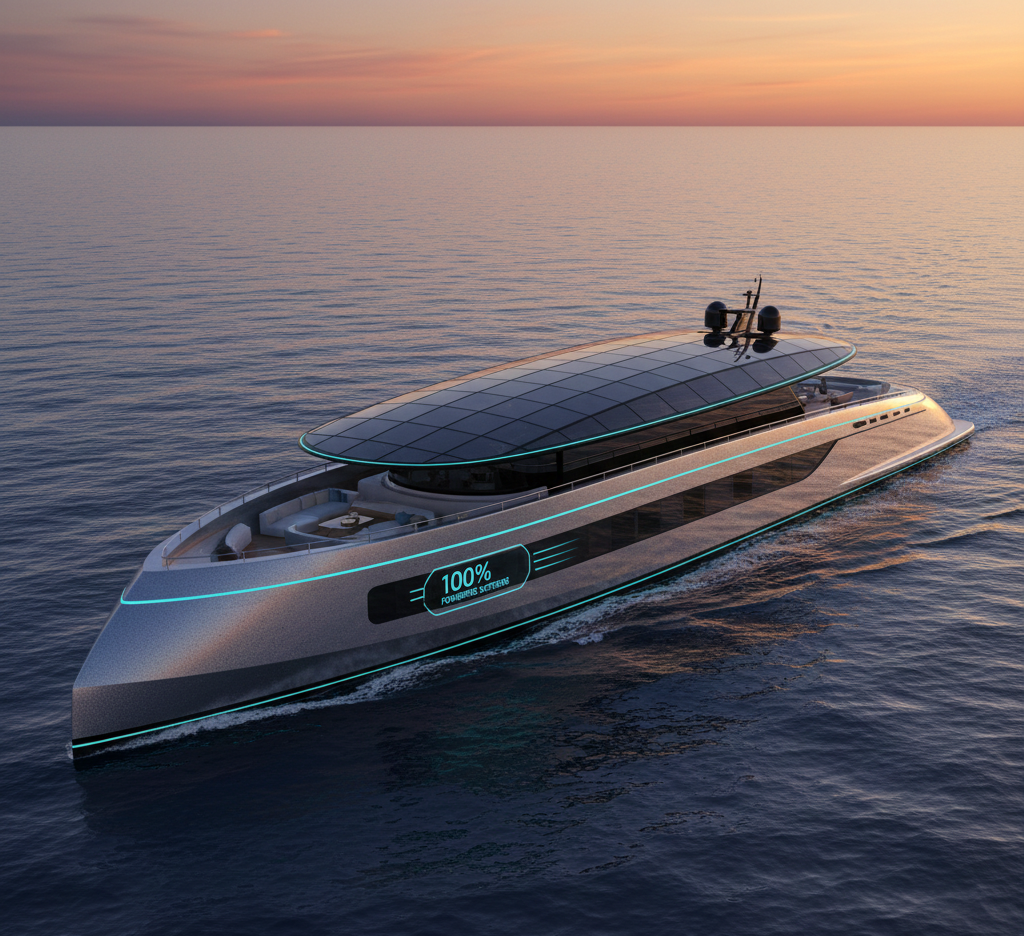
We have moved past the era of clunky solar panels bolted onto the roof. In 2026, solar glass and spray-on solar cells are being integrated directly into the yacht’s superstructure. Brands like Sunreef and Silent-Yachts are leading the charge, with “skin” panels that generate enough power to run the yacht’s kitchen, lights, and stabilizers indefinitely without burning a drop of fuel.
The Verdict for 2026
The “Green Yacht” is no longer about sacrifice. It’s about a better experience. Owners are finding that hybrid and hydrogen vessels are quieter, smell better (no diesel fumes), and hold their value significantly longer in a market that is quickly turning its back on “dirty” technology.